Goa is where Ubantu began. What started in 2019 as a single women’s enterprise in Pilgao village — making biodegradable sanitary pads — has grown into two village centres running livelihoods, digital literacy and sustainability training.
2019Working here since
2Village centres
25+Fabric products made locally
Samanvita — the programme that started it all
Pilgao village, North Goa · Inaugurated 20 October 2019
Samanvita is a Sanskrit word meaning inclusion. The programme was designed to reach disadvantaged sections of society and give them livelihood opportunities in a sustainable way.
It begins with the community rather than with a product. Community meetings and awareness sessions on public health and menstrual hygiene bring residents into the work of building cleaner neighbourhoods. In the phase that follows, women from that same community are trained so they can be employed at a biodegradable sanitary pad unit set up in their own neighbourhood.
Samanvita was run in Pilgao village, North Goa, on a pilot basis, funded by Tulip Diagnostics Pvt. Ltd. under CSR. The programme built working relationships with the village panchayat, the local sports club and residents to meet its objectives.
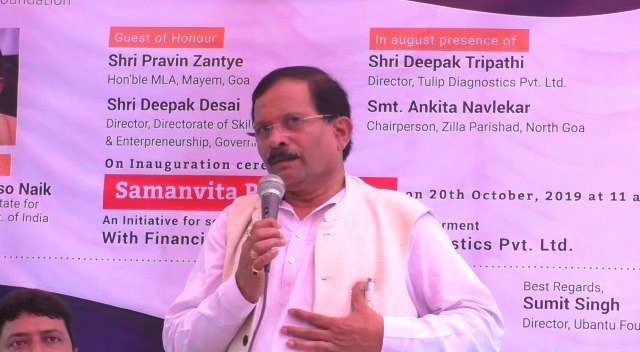
It was inaugurated on 20 October 2019 by Shri Shripad Naik, Hon’ble Minister of State (Independent Charge) for AYUSH, Government of India, in the presence of the Chairperson of the Zilla Parishad, the Sarpanch and elected representatives of the village panchayat, women’s self-help group members and citizens of the village.
The Samanvita programme inauguration, Pilgao village, 20 October 2019.
Through the pandemic: from sanitary pads to stitching
Pilgao village unit · 2020 onwards
During Covid, business at the village unit was hit hard — by the lockdown itself and by the fall in what local consumers could afford to buy.
Rather than pause the unit, Ubantu started a stitching project, training the women there to make handkerchiefs, carry bags and other fabric products. Quality raw material was sourced from the industrial hubs of Kolhapur and Bangalore.
Around twenty-five kinds of fabric product are now stitched by the women’s groups at the village unit, and sold through the SHG federations of Goa and at the NCUI Haat in Delhi, which exists to give self-help groups a marketplace.
Alongside the fabric work, women have been trained to make Goan sweets, pickles and papad — food products with real commercial potential in the state.
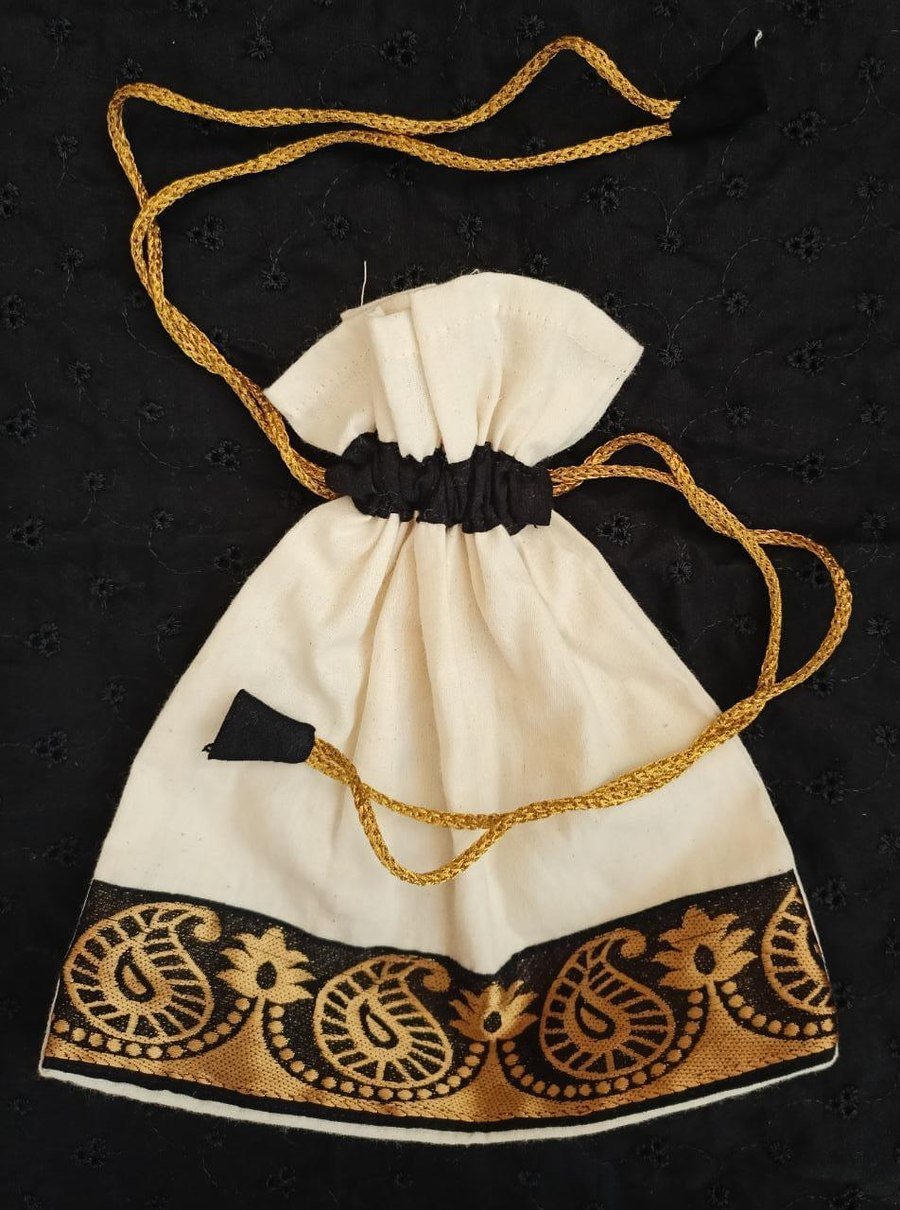
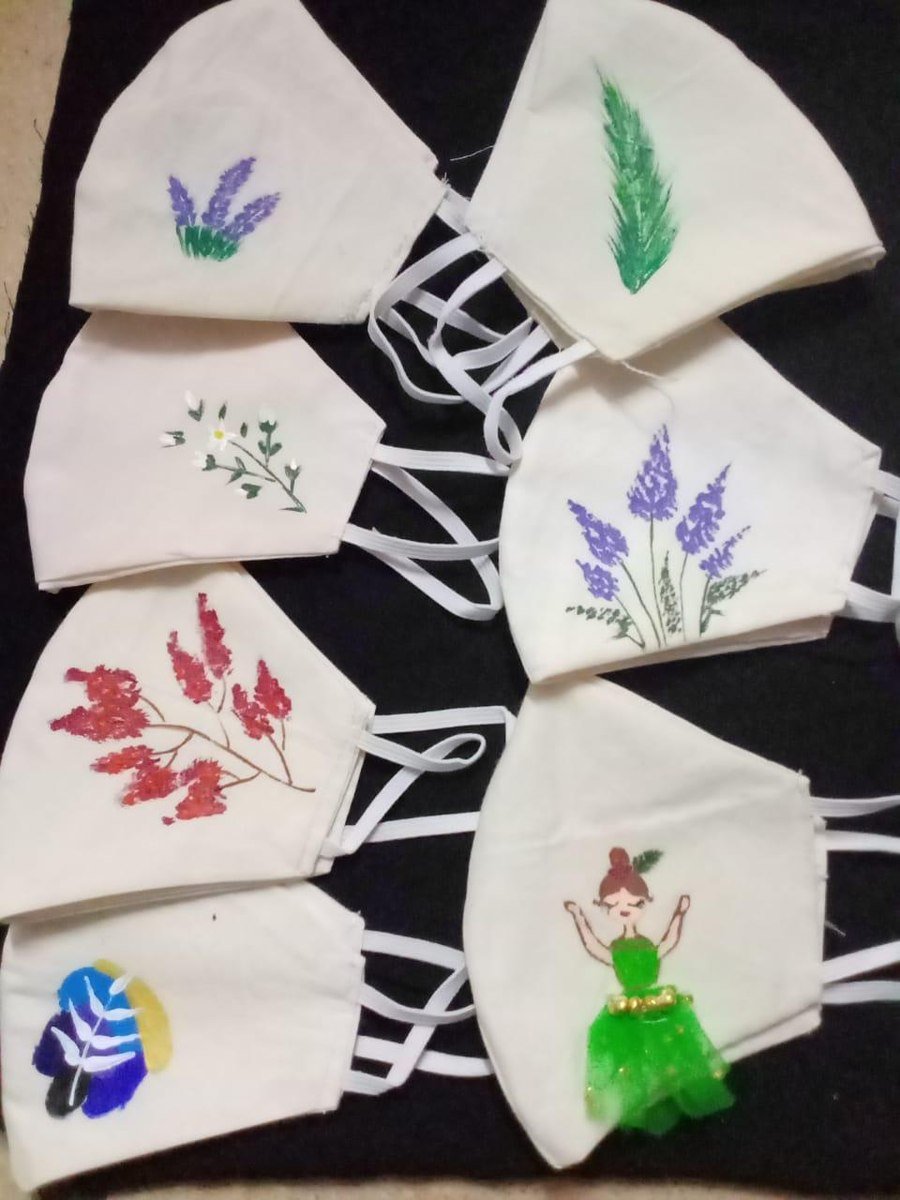
An embroidered pouch, one of the fabric products stitched locally.Embroidered face masks, stitched during the pandemic.
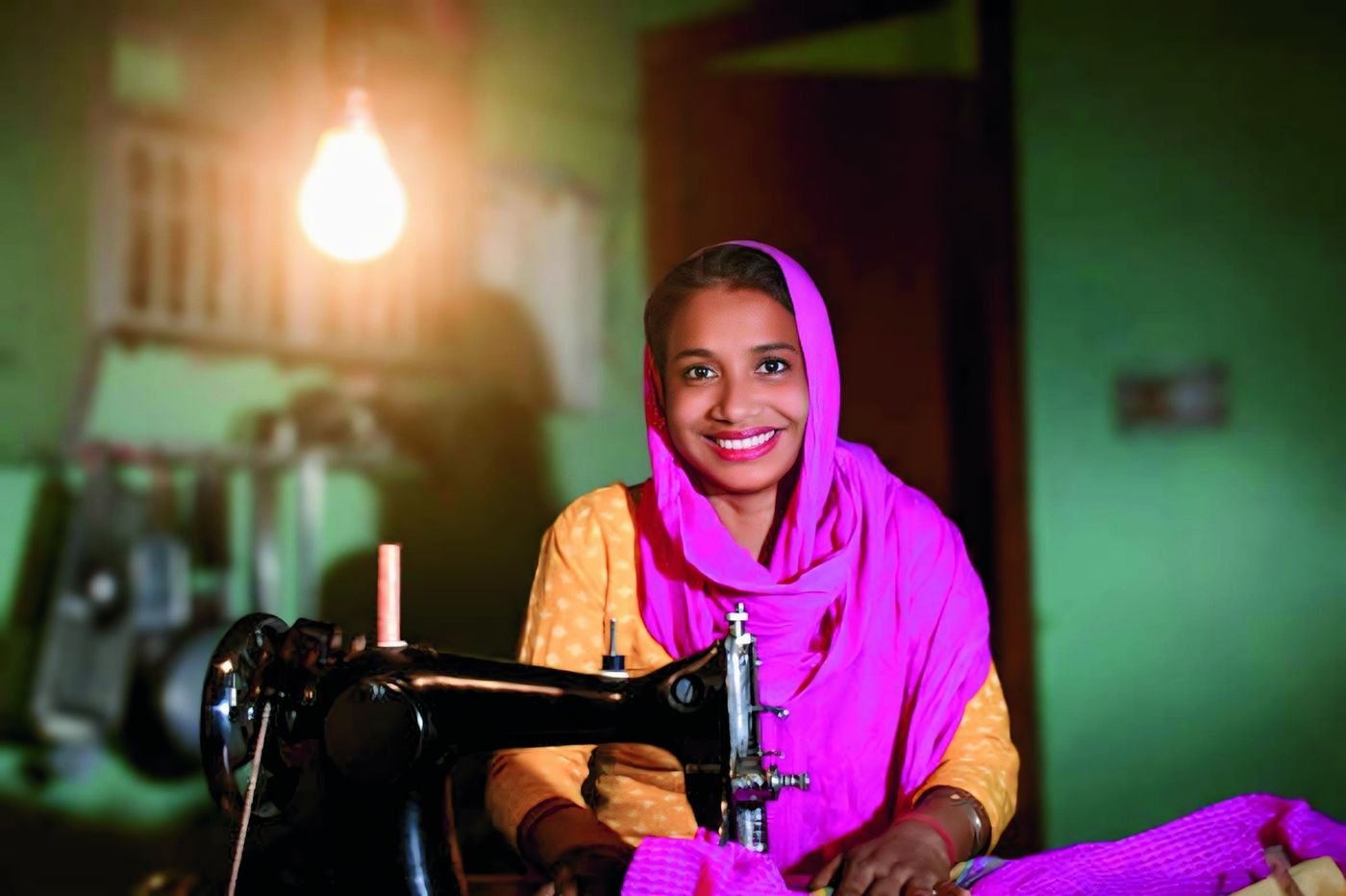
A woman at her sewing machine in an Ubantu livelihood centre.
Smart Colony, Smart Ward
Pilgao village · with the panchayat, schools and local clubs
After the programme was covered in several media channels, the Panchayat asked Ubantu to replicate it in Pilgao village.
Awareness campaigns on public health and menstrual hygiene, along with cleanliness drives, were organised in the village. The village panchayat, Pilgaon Sports Club, self-help groups, the government school and residents all took part, with real interest in developing cleaner wards.
Several organisations came forward to collaborate on awareness programmes about menstrual hygiene and the use of safe menstrual products — among them the Rotaract Clubs of Bicholim and Mapusa, and Phoenix Society, Valpoi.
Two centres: Pilgao and Chimbel
North Goa · Livelihoods project for women
Ubantu now runs training at two locations in Goa. Pilgao was the first, chosen because the Foundation has worked in the village since 2019. Chimbel, also in North Goa, was selected as the second location, where self-help groups and women entrepreneurs are being trained on digital literacy and livelihood development.
At Pilgao, the Foundation has also begun producing eco-friendly sanitary pads and garments from waste fabric and locally sourced raw material — reducing textile waste while giving SHG women both an income and a skill in sustainable manufacturing.
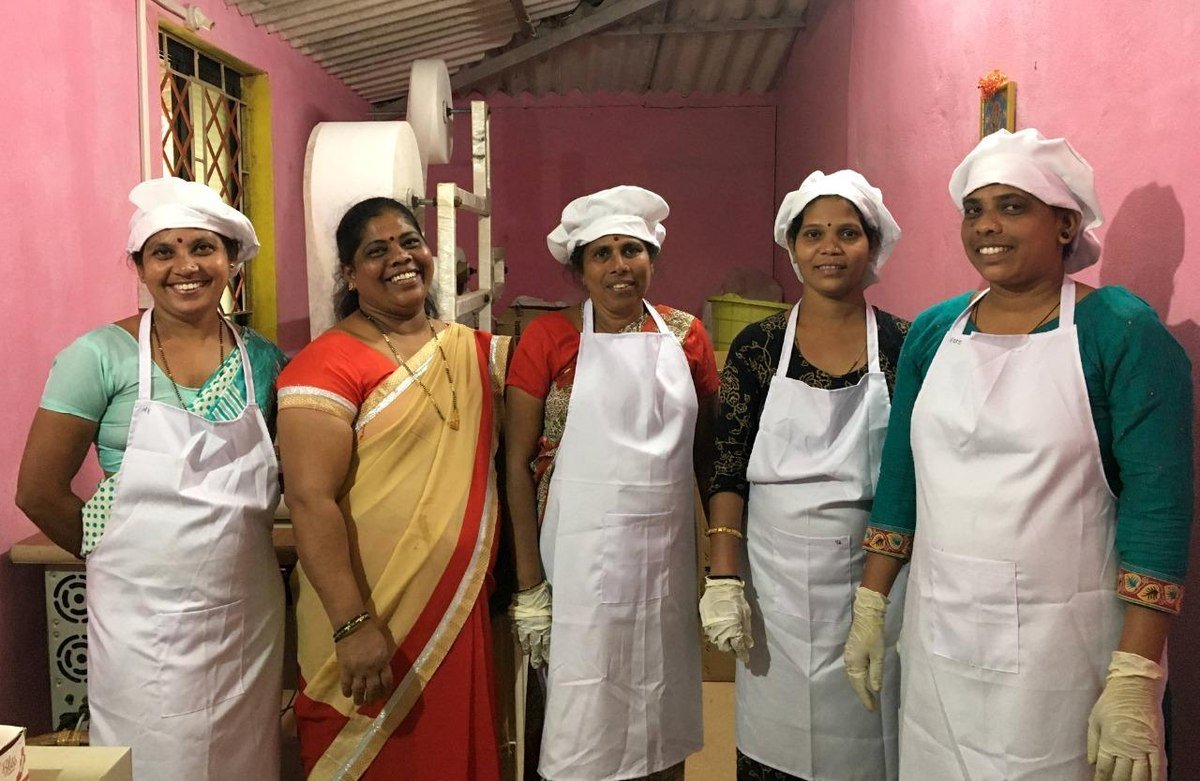
The production team at the Goa livelihood centre.
2025: digital literacy, bio-enzymes and building a business
Pilgao and Chimbel villages, North Goa · 2025
In 2025 the Foundation ran training programmes in both villages for self-help group women, covering digital literacy, financial literacy and business development.
Ms Manisha Gupta, Resource Person at Ubantu Foundation, led a session on the application of bio-enzymes — explaining how sustainable, eco-friendly solutions made from fruit waste can be turned into household products such as shampoo and toilet cleaner. She also shared ideas on branding, packaging and market linkage, encouraging participants to treat entrepreneurship as a route to self-reliance.
Mr Abhishek Agrawal, a digital literacy expert, addressed the gaps in digital and financial literacy and the importance of guarding against cyber fraud. Participants left more confident about navigating the internet safely, and with practical ideas for improving how their existing products are branded and promoted.
Together the sessions did more than add skills: they gave the groups the confidence to start and run their own micro-enterprises, reinforcing what self-help groups can do for grassroots economic development and women’s financial independence.
By the numbers: the Tower Vision project
November 2024 – March 2025 · independently reported to our CSR partner, Tower Vision India Pvt. Ltd.
Between November 2024 and March 2025, a livelihoods project supported by Tower Vision India Pvt. Ltd. under CSR trained women across Pilgao and Chimbel in vocational skills and digital inclusion, and helped them access essential government services. The results were independently reported back to our funding partner.
Activity
Trainees
Total (savings / earning)
Bio Enzyme
20
₹16,000 / ₹40,000
Soap Making
14
₹2,100 / ₹7,000
Stitching
22
₹22,000 / ₹44,000
PVC Aadhaar (generation/correction)
57
₹5,700
PAN Card (generation/correction)
30
₹6,000
ABHA Card generation
400
₹20,000
Total
543
₹71,800 / ₹91,000
The solar dryer equipment used at the Goa centre was sourced with help from Bindi International Association, a Section-8 social enterprise based in Ajmer, Rajasthan, working with rural women across 19 states, 30 districts and 147 villages in India — including a solar-engineering programme that has itself trained 147 women.
To give SHG products a real market beyond the village, the Foundation has identified a retail space in Pernem Taluka, near Arambol Beach — a spot with heavy footfall from foreign tourists — and begun talks with the National Cooperative Union of India (NCUI) to list products on the NCUI Haat e-commerce portal and its physical store. Government-run SHG stores across Goa have also been identified as additional outlets.
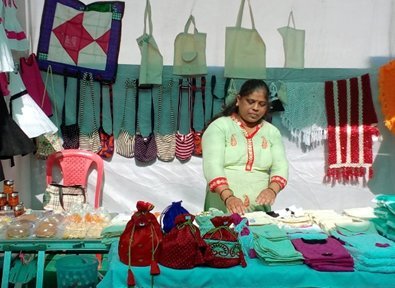
SHG-made bags, pouches and accessories on display and for sale at a market stall in Goa.
“With the support of the Ubantu Foundation and CSR funding from Tower Vision, we successfully formed a SHG. Today, 10 of us are working together to manage the SHG and carry out various livelihood activities. This initiative has brought us closer as a team, strengthened our confidence, and helped us become more financially independent.” — Khushi, Goa
Working in Goa alongside
Tulip Diagnostics Pvt. Ltd. (CSR)
Pilgao village panchayat
Pilgaon Sports Club
SHG federations of Goa
NCUI Haat, Delhi
Rotaract Club of Bicholim
Rotaract Club of Mapusa
Phoenix Society, Valpoi
Want to support the work in Goa?
Whether you would like to volunteer your skills, partner with us on CSR, or simply understand the work better — we would be glad to hear from you.