Uttar Pradesh is where Ubantu works at the largest scale — with farmers in Sonbhadra, with self-help group federations reaching across 150 groups, and with families in Noida who were entitled to government support but had no way to claim it.
150SHGs reached through one federation
80Farmers trained at Myorpur
5Locations across the state
Integrated farming and cooperative development
Myorpur region, Sonbhadra · 80 farmers, volunteers and field staff
A field visit was organised in Sonbhadra to promote integrated farming and cooperative development, giving comprehensive training on sustainable agricultural practice to 80 farmers, volunteers and field staff from the Myorpur region.
Sumit Singh, Director of Ubantu Foundation, gave detailed guidance on the governance, formation and bylaws of self-help groups, cooperatives and Farmer Producer Organisations (FPOs).
Dr G. P. Singh led a session on integrated farming techniques, focusing on ways to use land more effectively — including multilayer farming, where crops are chosen and planted by height so that a limited area yields far more.
Training self-help groups at Renusagar
Renusagar, Sonbhadra · 23 women
The team ran a training session at Renusagar with 23 women from self-help groups working in areas such as beauty services and stitching.
Sumit Singh explained how self-help groups, cooperatives and FPOs are formed, and the initiatives available to strengthen them. The discussion focused on something these enterprises often lack: reliable sources of raw material and a real understanding of how their markets work — the two things that most directly decide whether the women’s businesses are productive and profitable.
Duddhi: women-led enterprise and natural farming
Duddhi, Sonbhadra · with NRLM village organisations
A training programme in Duddhi focused on women-led entrepreneurship and sustainable livelihood development, bringing together women from the NRLM village organisation and others from the surrounding villages.
Sh. Gauri Shankar Kushwaha, a well-known agri-business expert in the district, explained how natural farming and sustainable horticultural practice can raise rural incomes. Sh. Ramesh Kushwaha covered new processing techniques and the key schemes launched by the Ministry of Agriculture for improving efficiency and widening livelihood options.
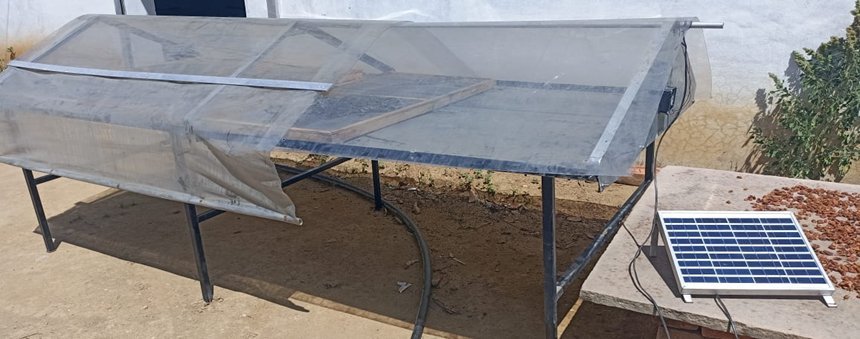
Beyond the training itself, participants were shown a solar drying and millet-processing unit Ubantu Foundation has set up in the area — a practical demonstration of the kind of small infrastructure that turns a farming skill into a saleable product.
The solar drying unit at Duddhi, used to turn farm produce into saleable dried goods.
During a field visit to Robertsganj, the team worked with women associated with the National Rural Livelihood Mission (NRLM). These women represented a Cluster Level Federation made up of 15 village organisations and 150 self-help groups.
Participants were introduced to livelihood models including soap making and dhoopbatti (incense stick) production, and trained to improve their skills in both. They were also guided on the design of their products — how to make them more appealing and genuinely market-ready.
Many participants asked Ubantu directly for more: training in soap and candle making, food processing and similar skills. The discussion turned to how the Foundation could support that demand with a wider range of programmes.
Social protection camp in Noida
Noida · 4 February 2025
Ubantu first ran a door-to-door campaign in selected localities of Noida, talking with residents to understand what they needed. It became clear that many required help simply to understand and access the government social protection schemes they were already eligible for.
A social protection camp was organised on 4 February 2025 to raise awareness of Central and State Government schemes, and to help people obtain the documents those schemes require. The aim was straightforward: close the gap between the government and the citizen, so that people entitled to support actually hold the paperwork needed to claim it.
Everyone who attended also received hands-on digital literacy training, so they could access government services online themselves.
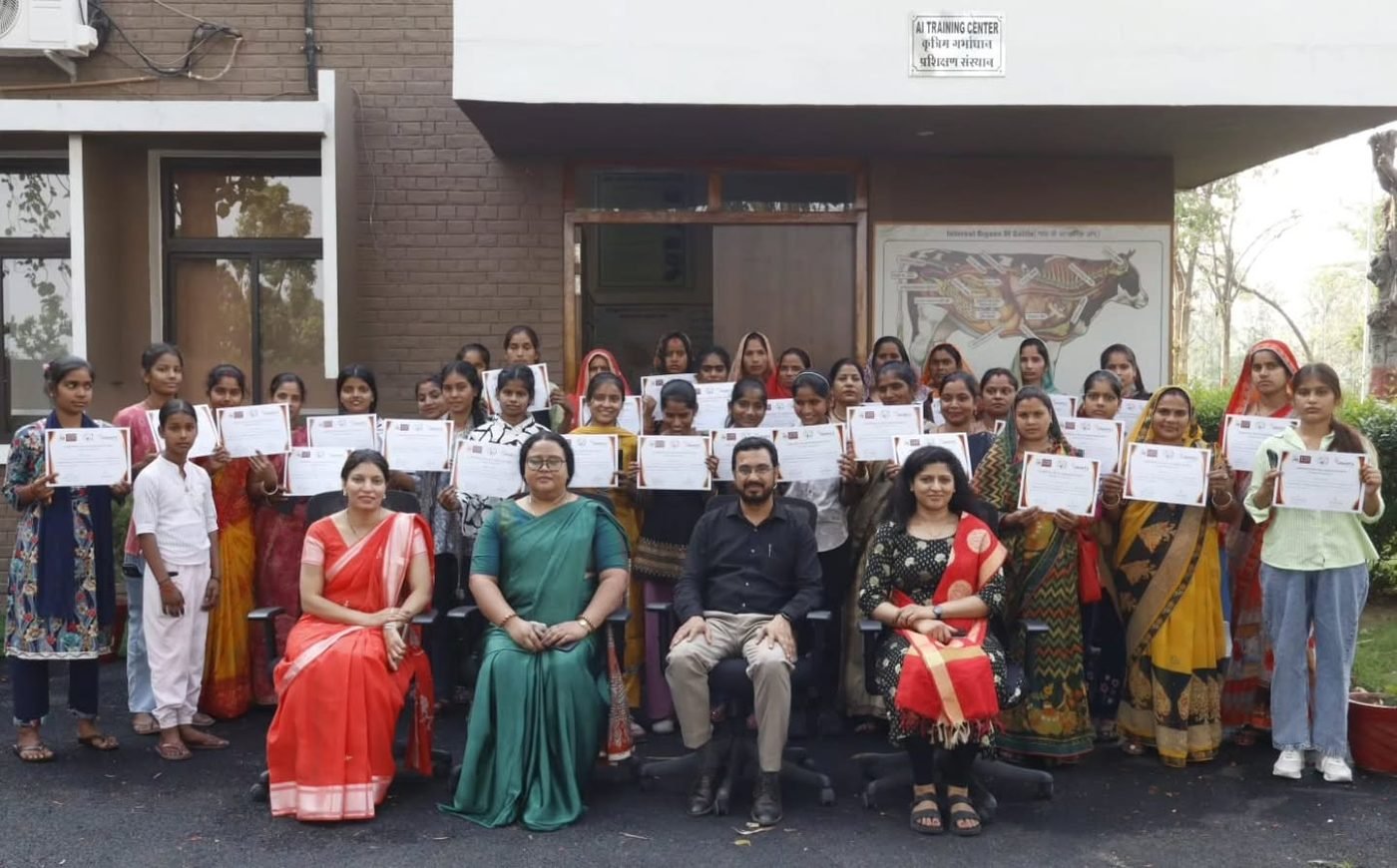
Participants receiving certificates after a training programme in Uttar Pradesh.
By the numbers: the Tower Vision project
November 2024 – March 2025 · independently reported to our CSR partner, Tower Vision India Pvt. Ltd.
Across Duddhi, Robertsganj and Noida, this CSR-funded project trained women and farmers in vocational skills, natural farming and access to government schemes — with real income and savings to show for it.
Activity
Trainees
Total (savings / earning)
Bio Enzyme
10
₹1,000 / ₹3,000
Soap Making
20
₹20,000 / ₹2,00,000
Stitching
10
₹4,000 / ₹10,000
Candle Making
22
₹2,200 / ₹6,600
Ayushman Bharat Scheme
50
₹5,000
MSME Registration
27
₹13,500
PVC Aadhaar (generation/correction)
150
₹15,000
PAN Card (generation/correction)
89
₹17,800
ABHA Card generation
195
₹9,750
Total
573
₹88,250 / ₹2,16,600
“I am very thankful to the Ubantu Foundation for giving me the opportunity to learn soap making. This training has helped me develop a new skill that I am now using to earn an income. It has boosted my confidence and given me a sense of independence.” — Urmila, Duddhi, Sonbhadra, Uttar Pradesh
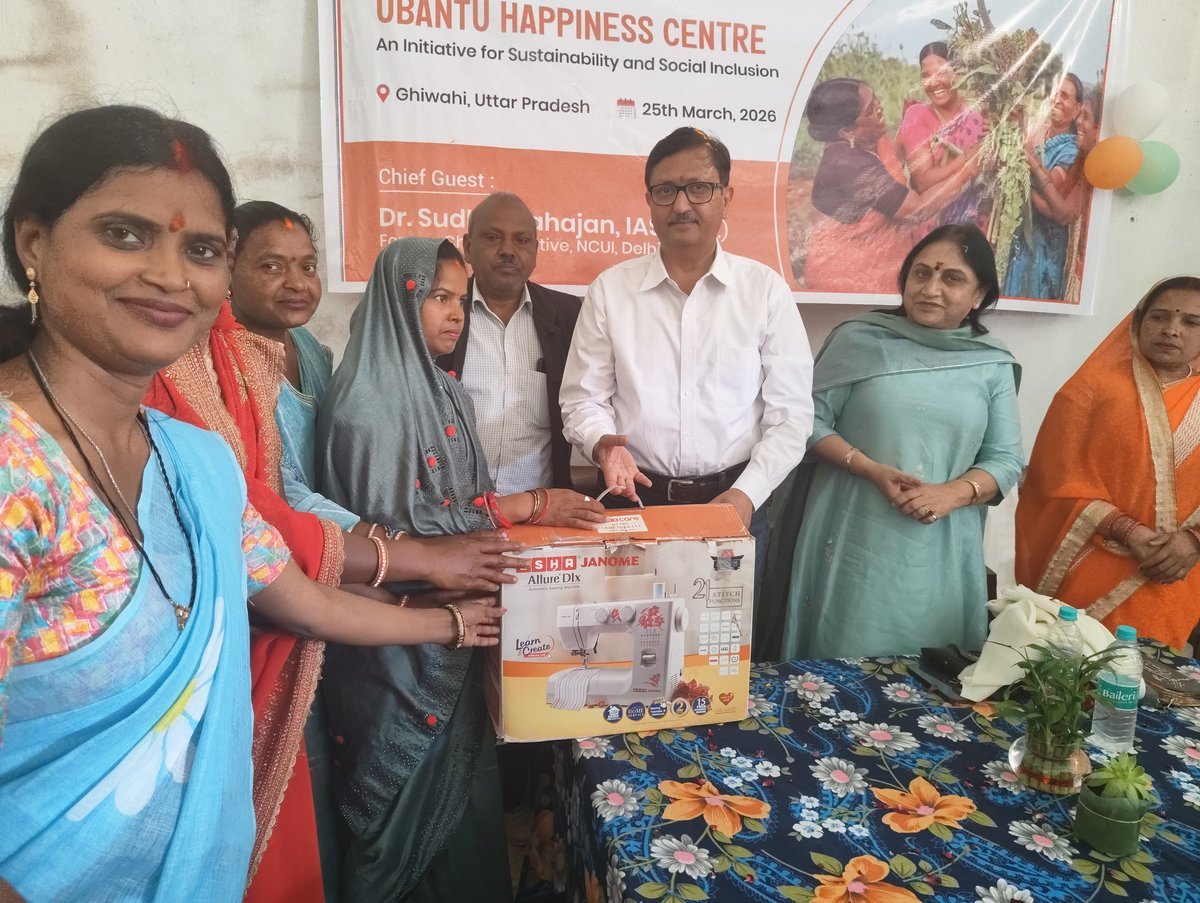
Inauguration of the Ubantu Happiness Centre, Ghiwahi
Ghiwahi village, Sonbhadra · 25 March 2026
The Ubantu Happiness Centre in Ghiwahi village opened to promote social inclusion and build scalable, community-led livelihood models. The centre was inaugurated in the presence of Dr Sudhir Mahajan, IAS (Retd.), Chairperson of Ubantu Foundation, as chief guest, with sewing machines presented to women to support their livelihoods.
Working in Uttar Pradesh alongside
National Rural Livelihood Mission (NRLM)
Cluster Level Federation, Robertsganj
NRLM village organisations, Duddhi
Want to support the work in Uttar Pradesh?
Whether you would like to volunteer your skills, partner with us on CSR, or simply understand the work better — we would be glad to hear from you.